
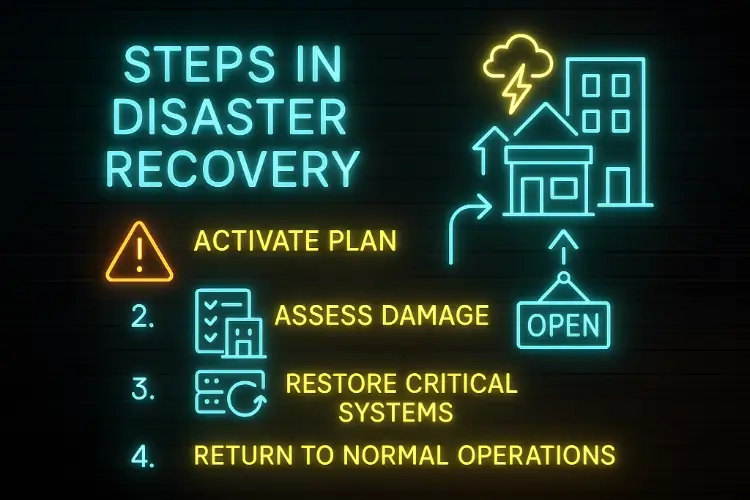
In today’s fast-paced business environment, a robust disaster recovery plan (DRP) is essential. Whether you’re a medium-sized business owner, managing director, or operations manager, safeguarding your company’s IT infrastructure against unexpected disasters should be a top priority. This guide will walk you through creating a disaster recovery plan to protect your business and ensure continuity in the face of unforeseen events.
What is a Disaster Recovery Plan?
A disaster recovery plan (DRP) is a documented, structured approach with instructions for responding to unplanned incidents. This plan is designed to help businesses recover and protect their IT infrastructure, ensuring minimal disruption to operations during and after a disaster.
Why Your Business Needs a Disaster Recovery Plan
Disasters can strike at any time—natural disasters, cyber-attacks, hardware failures, or human error can severely disrupt business operations. A well-crafted disaster recovery plan can help you:
- Minimise Downtime: Quickly restore critical systems and resume normal operations.
- Reduce Financial Loss: Mitigate the financial impact of prolonged downtime.
- Protect Your Reputation: Ensure customer trust and maintain your brand’s reputation.
- Comply with Regulations: Meet legal and industry-specific compliance requirements.
Step-by-Step Guide to Writing a Disaster Recovery Plan
Conduct a Business Impact Analysis (BIA)
A Business Impact Analysis is the foundation of any disaster recovery plan. It involves identifying critical business functions and the potential impact of a disruption. To conduct a BIA:
- Identify Critical Processes: List all the critical functions that are essential for your business operations.
- Determine Recovery Time Objectives (RTO): Establish the maximum acceptable downtime for each function.
- Assess the Impact: Consider the financial, operational, and reputational impact of disruptions to each critical process.
Define Your Disaster Recovery Strategy
Your disaster recovery strategy outlines the methods and tools you’ll use to recover data and restore business operations. Key components include:
- Data Backup: Regularly back up your data to a secure, off-site location. Ensure backups are encrypted and accessible in a disaster.
- Recovery Sites: Identify primary and secondary recovery sites where operations can continue if your main site becomes unusable.
- Redundancy Measures: Implement redundant systems and networks to ensure high availability and failover capabilities.
Develop a Communication Plan
Effective communication is crucial during a disaster. Your plan should outline:
- Communication Hierarchy: Define who will be responsible for communication during a disaster.
- Contact Lists: Maintain updated contact information for key stakeholders, including employees, vendors, and clients.
- Communication Channels: Identify the communication tools (e.g., email, phone, messaging apps) that will be used during a disaster.
Create a Detailed Recovery Procedure
A well-defined recovery procedure will guide your IT team in restoring services after a disaster. This procedure should include:
- Step-by-Step Instructions: Detailed instructions for restoring data, applications, and systems.
- Roles and Responsibilities: Clearly defined roles for each team member involved in the recovery process.
- Testing and Validation: Procedures for testing the recovery process to ensure it works as intended.
Document Your Disaster Recovery Plan
Documenting your disaster recovery plan is critical to its success. This document should be:
- Comprehensive: Include all aspects of the recovery process, from the initial response to full restoration.
- Accessible: Store the plan in a secure but accessible location.
- Regularly Updated: Review and update the plan regularly to reflect changes in technology, business processes, or personnel.
Test Your Disaster Recovery Plan
Testing your disaster recovery plan is essential to ensure it works when needed. There are several types of tests you can perform:
- Tabletop Exercises: Simulate a disaster scenario and discuss how your team would respond.
- Walkthroughs: Go through the plan step-by-step with the appropriate team members to identify any gaps or issues.
- Full-Scale Drills: Conduct a full-scale simulation to test the plan’s effectiveness in a real-world scenario.
Train Your Team
Even the best disaster recovery plan will fail without proper training. Ensure all team members are:
- Familiar with the Plan: Understand their roles and responsibilities in the event of a disaster.
- Prepared for Their Tasks: Receive regular training on the specific tasks they’ll need to perform during recovery.
- Aware of Updates: Keep everyone informed about any changes or updates to the plan.
Speak to a Disaster Recovery Plan Expert
Creating a disaster recovery plan might seem daunting, but the effort you invest today could save your business tomorrow. By following this step-by-step guide, you can develop a comprehensive, effective disaster recovery plan that minimises risk and ensures your business is prepared for any eventuality.
We know your time is scarce as a business owner, that’s why Aztec IT provides tailored disaster recovery plans to prepare your business for every situation. We create, manage, and test DRPs specifically designed to prioritise your business processes, utilising regular backups and proven disaster recovery methods.
For expert guidance on disaster recovery planning, speak to a disaster recovery plan expert at Aztec.

